Agriculture

a7
Agriculture

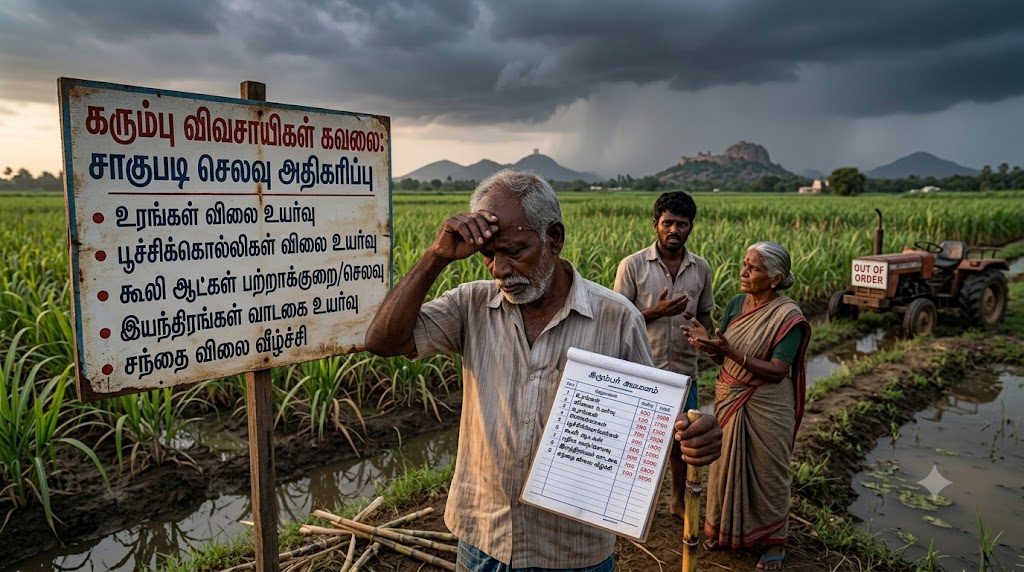
Sugarcane Farmers Face Rising Cultivation Costs

Sugarcane farmers in Viluppuram have raised concerns about increasing cultivation costs, lower returns and delays in payments from private sugar mills. Farmers reported that higher expenses for fertilisers and labour have increased pressure on their incomes. The district has historically been an important sugarcane-producing region and is described by the district administration as the “sugar bowl of Tamil Nadu.” Sugarcane produced in Viluppuram supplies mills within the district as well as mills in neighbouring districts. Recent reporting has highlighted concerns among growers about the long-term viability of sugarcane cultivation
a6
Agriculture

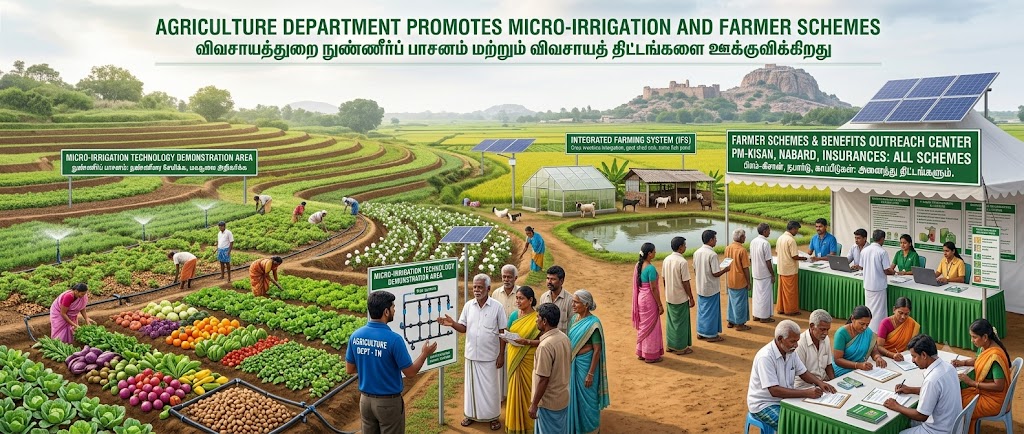
Agriculture Department Promotes Micro-Irrigation and Farmer Schemes

The agriculture department is implementing several schemes aimed at improving farm productivity, water efficiency and farmer income. These include Pradhan Mantri Krishi Sinchayee Yojana (PMKSY) for micro-irrigation, the National Mission on Sustainable Agriculture, collective farming initiatives and programmes supporting certified seeds. The district also implements schemes covering paddy, millets, pulses, oilseeds, sugarcane and other crops. Farmer training and technology-transfer activities are supported through the Agricultural Technology Management Agency (ATMA) and the Farmers Training Centre at Tindivanam.

a5
Agriculture

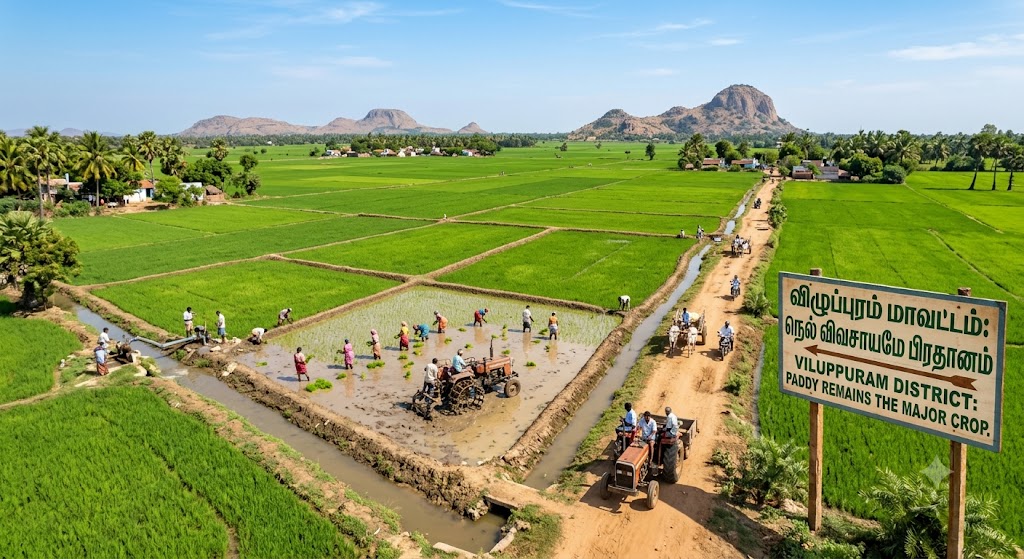
Paddy Remains the Major Crop Across Viluppuram

Paddy continues to be the principal agricultural crop in Viluppuram District and is cultivated across the Sornavari, Samba and Navarai seasons. According to the district administration, paddy accounts for around 40% of the district’s total cropped area. Blackgram is another major crop, accounting for more than 80% of the district’s pulses area. The strong presence of paddy and pulses highlights the important role agriculture continues to play in the district economy.

a4
Agriculture

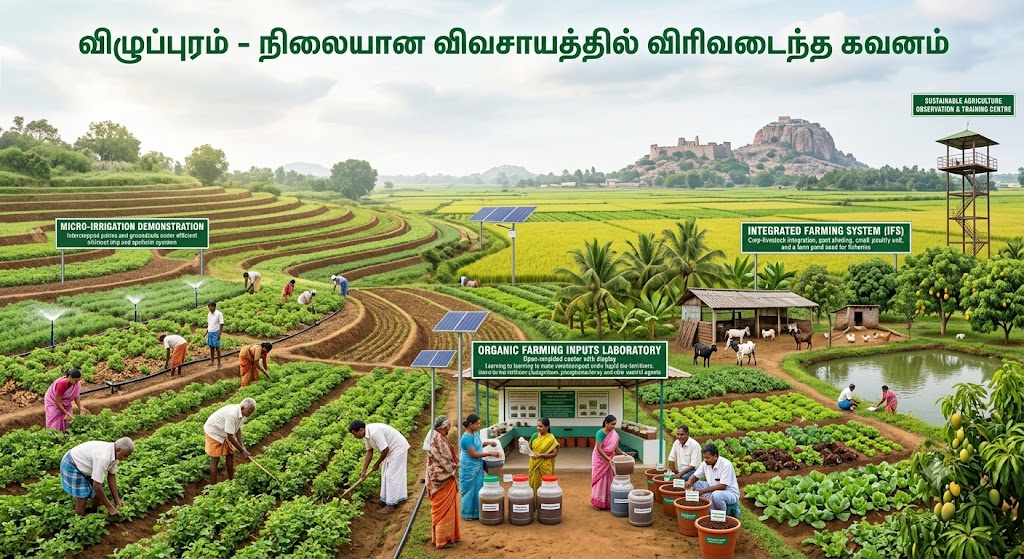
Viluppuram Expands Focus on Sustainable Agriculture

The district agriculture department continues to promote sustainable farming practices aimed at improving productivity while reducing cultivation costs and excessive dependence on chemical inputs. The district has facilities including a Liquid Bio-Fertilizer Laboratory at Mugaiyur, a Bio-Control Laboratory at Viluppuram, and a Soil Testing Laboratory. Biofertilizers and biological pest-control agents are supplied to farmers, while soil testing helps farmers make fertilizer decisions based on soil-health information.

a3
Agriculture

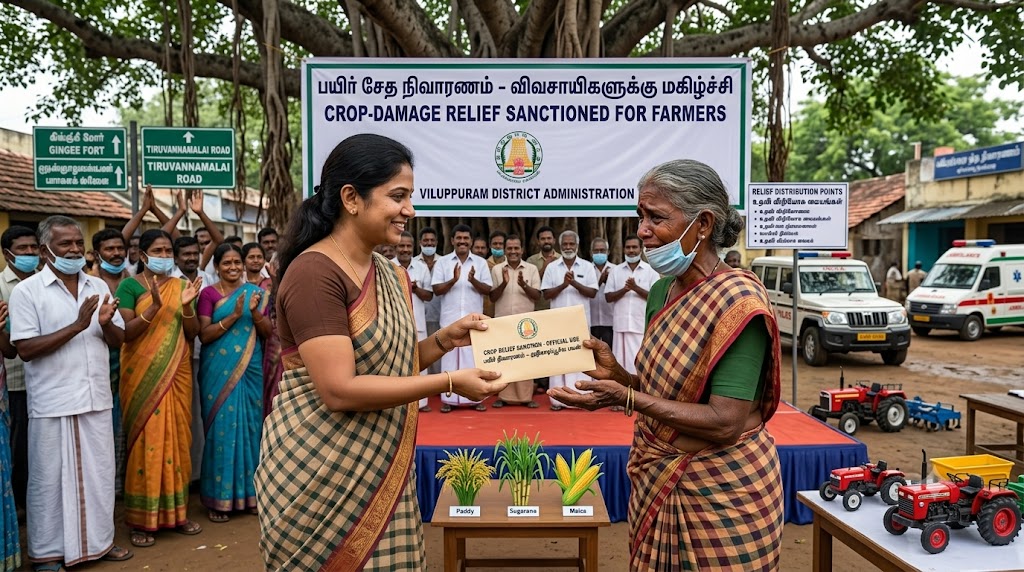
Crop-Damage Relief Sanctioned for Farmers

Farmers affected by crop damage caused by the 2025–26 North-East Monsoon and Cyclone Ditwah were included in a Tamil Nadu government relief package. The state government sanctioned approximately ₹111.96 crore from the State Disaster Response Fund for 84,848 farmers across affected districts, including Viluppuram. The relief was based on crop-damage surveys and was intended for agricultural and horticultural crops where the assessed damage exceeded the applicable threshold.

a2
Agriculture

Farmers Advised to Protect Crops During Heavy Rain

Farmers in the district were advised to take precautionary measures ahead of a forecast of heavy rainfall. The district administration urged farmers to harvest mature crops without delay and protect harvested produce from moisture. Farmers were advised to cover harvested grains with tarpaulins during rainfall and store properly dried produce in safe, covered locations. The guidance was particularly important for paddy and other crops being harvested during the period.

a1
Agriculture

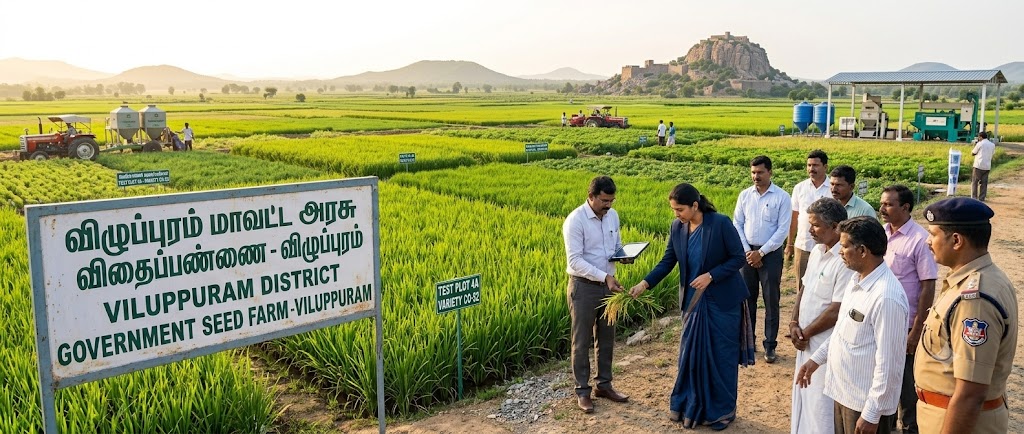
District Collector Inspects Government Seed Farms

The District Collector inspected government seed farms in the district on 3 July 2026 as part of efforts to review agricultural infrastructure and seed-production activities. Government seed farms in Viluppuram play an important role in multiplying breeder and foundation seeds and supplying quality certified seeds to farmers. The district agriculture department identifies Kakuppam, Iruvelpattu, Vadakkanandhal and Vanur as government seed-farm locations. Paddy, groundnut, blackgram, greengram, cumbu, ragi and gingelly are among the crops covered by the seed-production programme.