


Welcome To Viluppuram

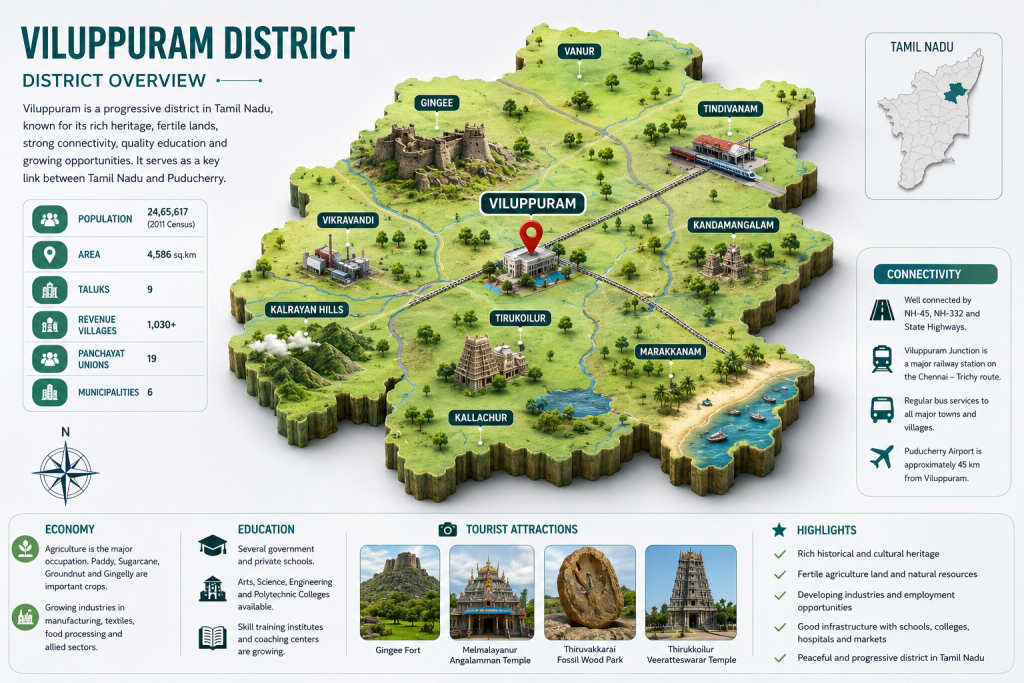
Viluppuram is an important district in Tamil Nadu, known for its rich history, cultural heritage, agriculture, temples, educational institutions, and growing commercial activities. The district serves as an important transportation and connectivity hub between northern Tamil Nadu and the southern parts of the state. Gingee Fort, Thiruvakkarai Fossil Wood Park, Melmalayanur Angalamman Temple, and several historic temples are among its notable attractions. Agriculture remains an important part of the local economy, with paddy, sugarcane, groundnut, and other crops cultivated across the region. Viluppuram also has government and private educational institutions, healthcare facilities, banks, businesses, employment opportunities, and developing infrastructure. With its combination of heritage, natural attractions, agriculture, education, and economic activity, Viluppuram continues to play an important role in the development of northern Tamil Nadu.

Distrct Overview

district

Viluppuram District is one of the important districts of Tamil Nadu, known for its rich historical heritage, agriculture, education, temples, and growing commercial activities. Located in northern Tamil Nadu, the district has strong road and railway connectivity, making it an important transportation hub between Chennai, Puducherry, and southern parts of the state. The district is home to several historically and culturally significant destinations, including Gingee Fort, Melmalayanur Angalamman Temple, Thirukovilur Veeratteswarar Temple, and Thiruvakkarai Fossil Wood Park. These attractions draw visitors interested in history, spirituality, archaeology, and nature. Agriculture plays a major role in the district’s economy. Paddy, sugarcane, groundnut, and other crops are widely cultivated, supported by the region’s agricultural resources. Alongside agriculture, trade, small-scale industries, manufacturing, food processing contribute to the local economy.

Taluks Of Viluppuram

taluks

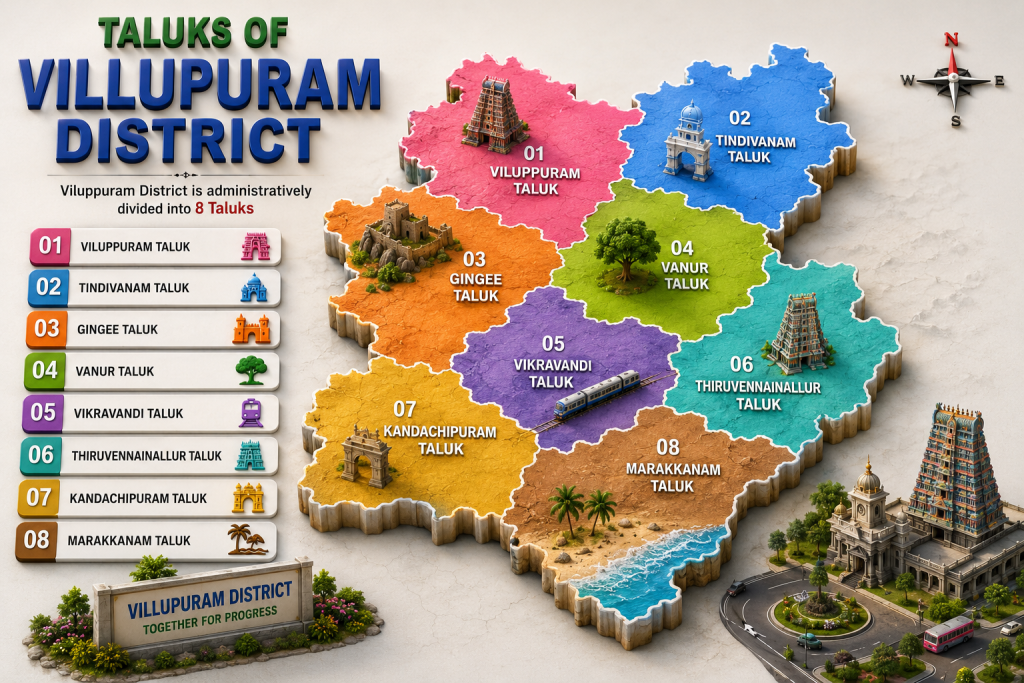
The 9 Taluks are:

  1. Viluppuram
  2. Vikkiravandi
  3. Vanur
  4. Kandachipuram
  5. Thiruvennainallur
  6. Tindivanam
  7. Gingee
  8. Marakkanam
  9. Melmalayanur

Viluppuram District is administratively organised into two Revenue Divisions—Viluppuram and Tindivanam—and nine Revenue Taluks.

Population & Statistics Of Viluppuram

Population

20,71,179

2011 Census

Total Area

3,725.54

Sq. Km.

Administrative Taluks

9

Taluks

Revenue Villages

929

Revenue Villages

Development Blocks

13

Blocks

Municipalities

2

Municipalities

Town Panchayats

8

Town Panchayats

Village Panchayats

688

Village Panchayats

History Of Viluppuram

history

Viluppuram has a rich and diverse history shaped by ancient Tamil dynasties, powerful kingdoms, historic battles, religious traditions, colonial influences, and the development of modern transportation. The region has been associated with the Cholas, Pallavas, Pandyas, Vijayanagara rulers and later the Nayaks, leaving behind numerous temples, inscriptions, monuments and archaeological remains. One of the most prominent symbols of the region’s history is Gingee Fort, a remarkable hill fortress that played an important strategic role and witnessed conflicts involving the Marathas, Mughals, French and British. The district is also home to several ancient temples that demonstrate the architectural and cultural traditions of different periods of Tamil history. During the colonial period, the region experienced French and British influence, particularly because of its proximity to Puducherry and its strategic location. .

S.No King / Dynasty From To Historical Contribution
1 Pallavas c. 275 CE c. 897 CE Developed temple architecture, inscriptions and early administrative traditions.
2 Medieval Cholas c. 850 CE c. 1279 CE Expanded temple culture, irrigation, agriculture and administrative systems.
3 Pandyas c. 600 CE c. 1345 CE Strengthened Tamil cultural and religious traditions and controlled parts of the region.
4 Vijayanagara Empire 1336 CE 1646 CE Influenced administration, trade, temple development and regional military structures.
5 Nayak Rulers c. 1529 CE c. 1670 CE Strengthened fortifications and supported temple and cultural development.
6 Maratha Rulers 1670 CE 1698 CE Controlled Gingee Fort and contributed to the region's military history.
7 Mughal Empire 1698 CE 1750s CE Extended imperial influence over Gingee and surrounding territories.
8 French Influence 18th Century 1760s CE Played a significant role in regional conflicts and the political history around Puducherry.
9 British East India Company 18th Century 1858 CE Established administrative and commercial control over the region.
10 British Crown 1858 CE 1947 CE Developed modern administrative, railway and transportation infrastructure.

Revenue Divisions Viluppuram

01
Revenue Division

Viluppuram Division

5 Taluks
01
Revenue Taluk

Viluppuram

02
Revenue Taluk

Vikkiravandi

03
Revenue Taluk

Vanur

04
Revenue Taluk

Kandachipuram

05
Revenue Taluk

Thiruvennainallur

02
Revenue Division

Tindivanam Division

4 Taluks
06
Revenue Taluk

Tindivanam

07
Revenue Taluk

Gingee

08
Revenue Taluk

Marakkanam

09
Revenue Taluk

Melmalaianur

Crops Of Viluppuram

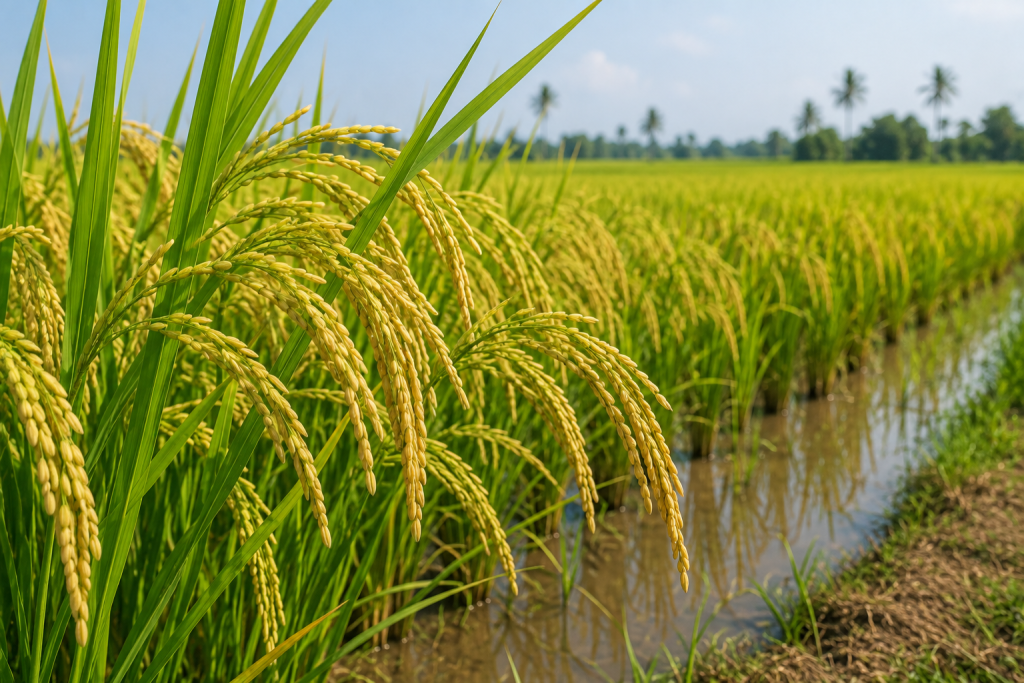
Paddy

paddy

Paddy is one of the most important food crops cultivated in Viluppuram District. It is grown extensively in areas with suitable irrigation and rainfall.

Black Gram

balck

Black gram, locally known as Urad Dal, is an important pulse crop in Viluppuram. The district has a large area under black gram cultivation, and it is an important source of protein

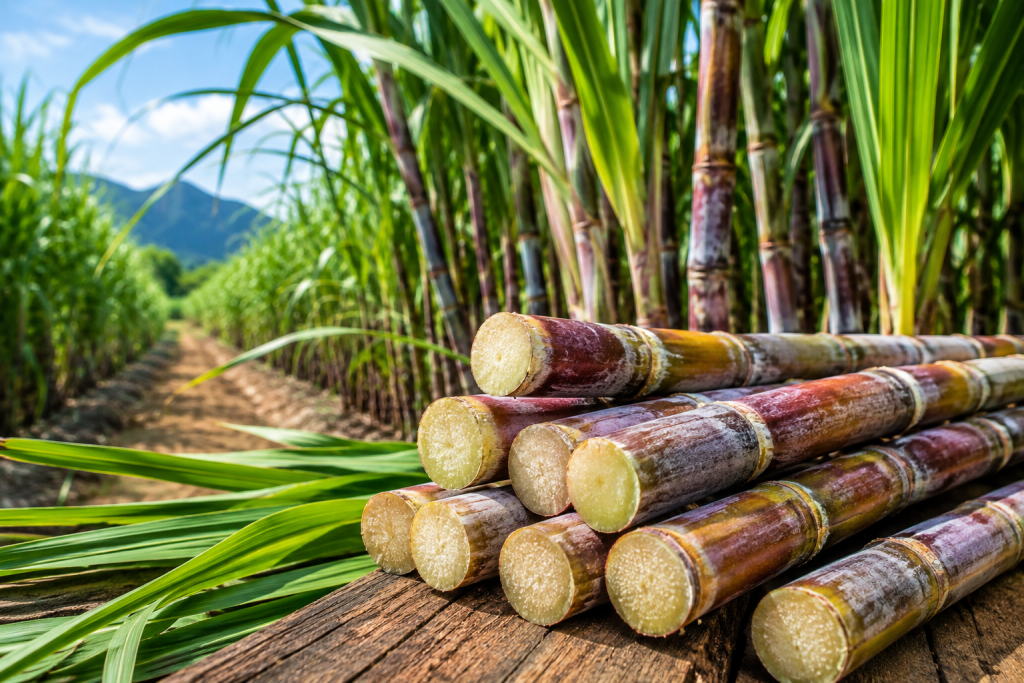
Sugarcane

ugar

Sugarcane is an important commercial crop of Viluppuram District. The crop requires considerable water and is cultivated in areas with suitable irrigation facilities.

Groundnut

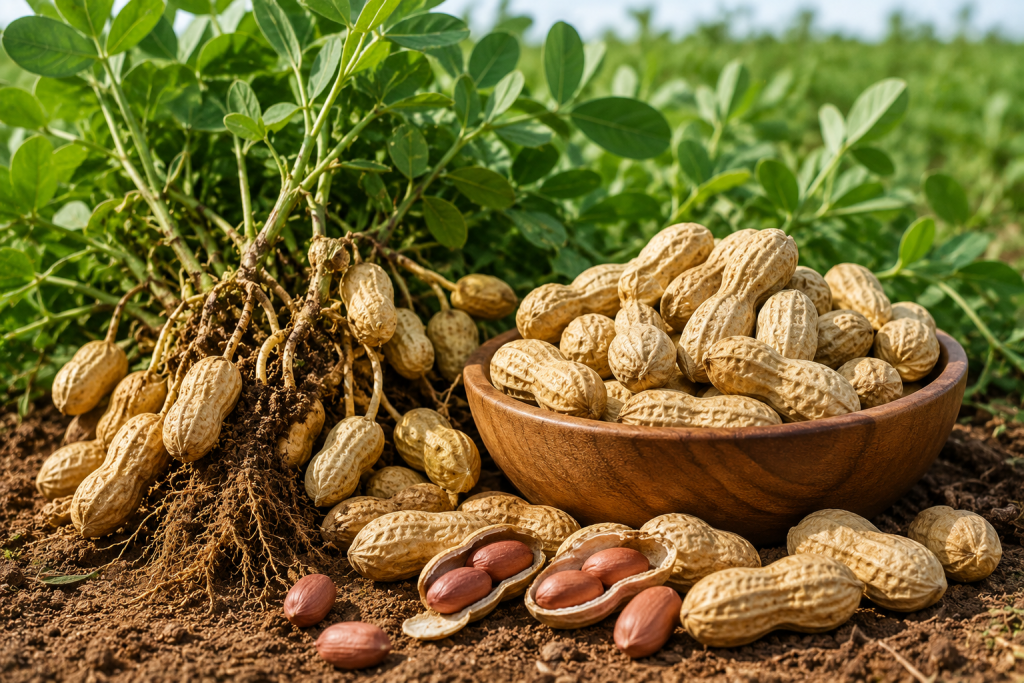
ground

Groundnut is one of the important oilseed crops grown in Viluppuram. It is particularly suitable for several dryland areas of the district.

Seasons Of Viluppuram

Viluppuram Seasons
☀️
01

Summer

March – May

Summer is generally hot and dry. Daytime temperatures rise considerably, with May usually being the warmest month. The season increases water demand and creates challenging conditions for agriculture and outdoor activities.

🌡️ 30°C – 40°C
🌧️
02

Southwest Monsoon

June – September

The southwest monsoon brings periodic rainfall, cloudy conditions and increased humidity. Rainfall during this period supports groundwater recharge, agricultural activities and vegetation across the district.

🌡️ 27°C – 36°C
⛈️
03

Northeast Monsoon

October – December

The Northeast Monsoon is the most important rainy season for Viluppuram. It contributes the largest share of the district's annual rainfall and plays an important role in agriculture, reservoirs and groundwater recharge.

🌡️ 22°C – 32°C
❄️
04

Winter

January – February

Winter brings comparatively cooler and drier weather. Morning temperatures are more comfortable, rainfall is generally lower and outdoor activities become more pleasant across the district.

🌡️ 20°C – 30°C

🌾 Climate & Agriculture

Viluppuram receives an average annual rainfall of around 1,060 mm. The Northeast Monsoon contributes the largest share of rainfall. Seasonal rainfall is particularly important for agriculture, irrigation and groundwater resources. Paddy is cultivated across three crop seasons — Sornavari, Samba and Navarai — making seasonal weather an important part of the district's agricultural cycle.

Tastes Of Viluppuram

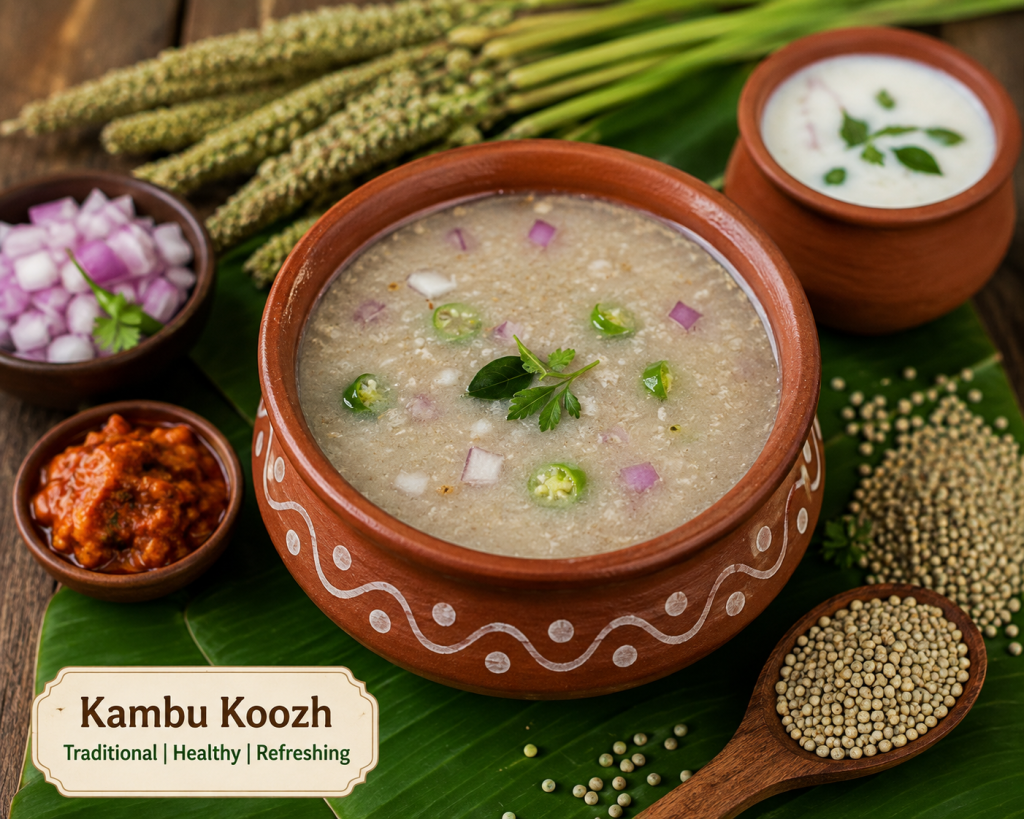
Kambu Koozh

kumb

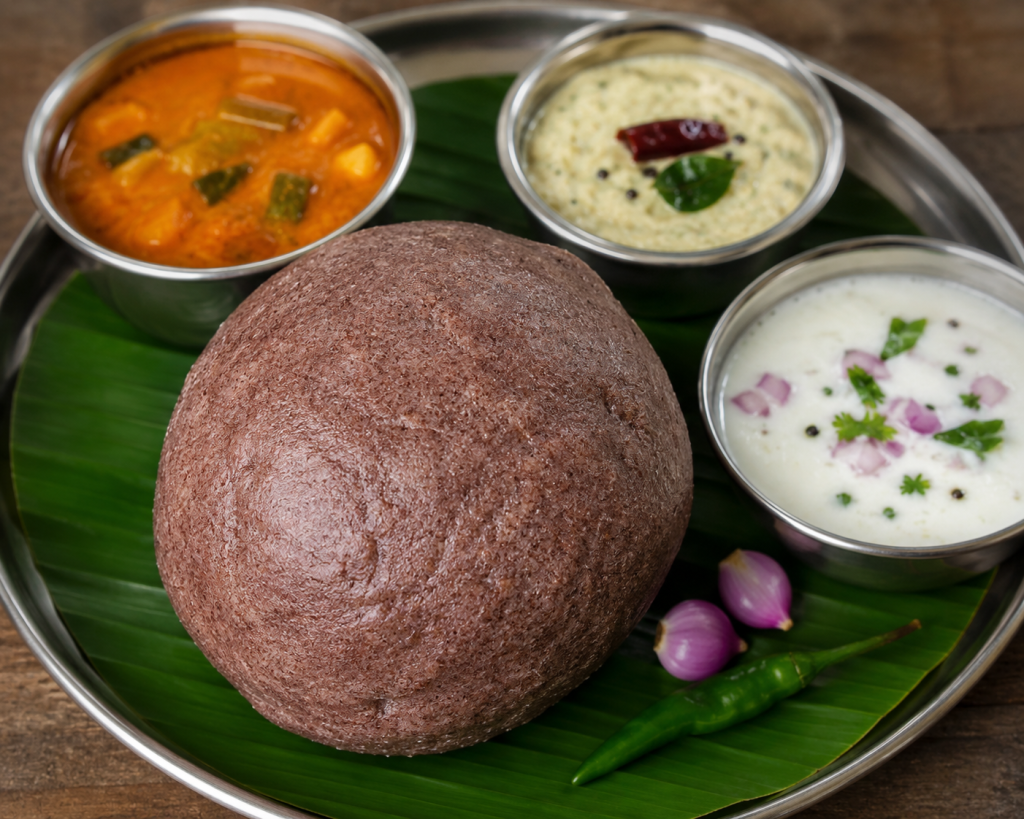
Ragi Kali

ragi

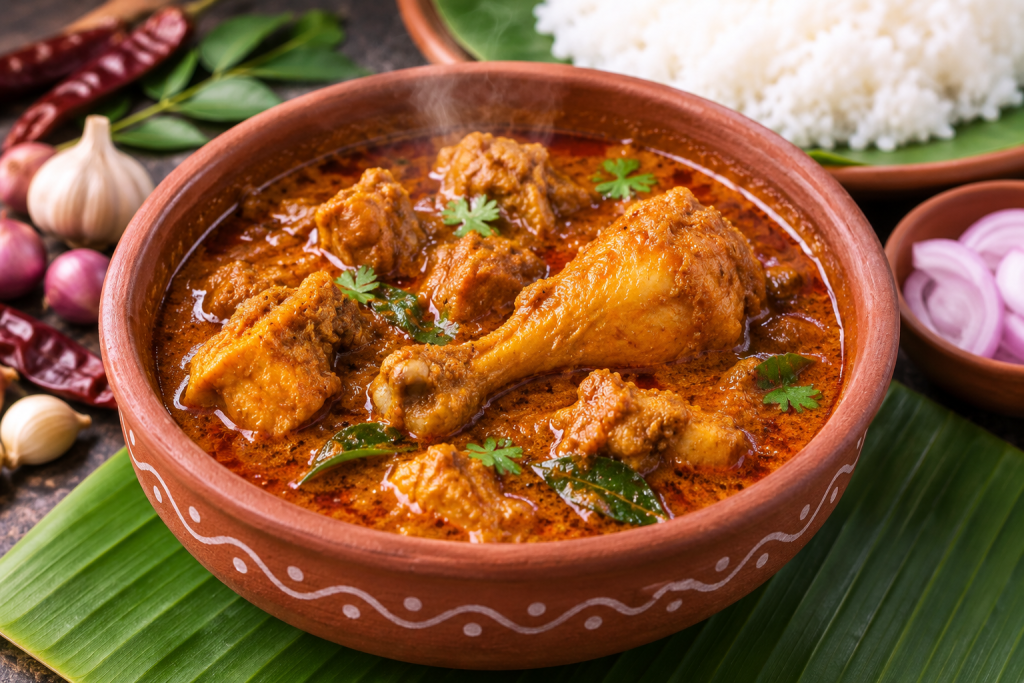
Nattu Kozhi Kuzhambu

food 3

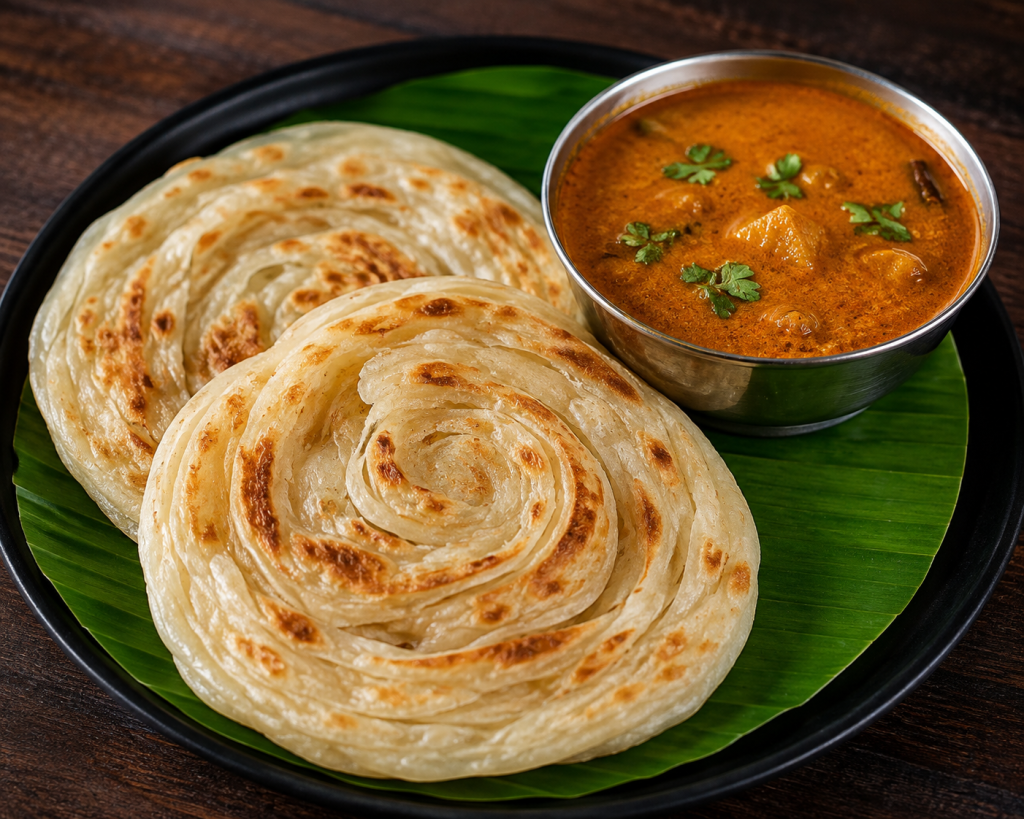
Parotta & Salna

parota
dance

Economic Strengths Of Viluppuram

Viluppuram Economic Strengths
Agriculture in Viluppuram
🌾

Agriculture

Agriculture is a major economic strength of Viluppuram. Paddy, pulses, sugarcane, groundnut and other crops support farmers, rural livelihoods and agricultural markets across the district.

Explore Agriculture →
Agro industries and food processing
🏭

Agro Industries

Agricultural production supports food processing, rice milling, sugar production and other value-added activities, creating employment and strengthening rural economic activity.

Explore Industries →
Trade and commerce
🛍️

Trade & Commerce

Viluppuram and its major towns support a wide network of retail businesses, wholesale markets, financial services, restaurants and commercial activities.

Explore Commerce →
Transport and connectivity
🚛

Transport

Viluppuram's road and railway connectivity supports the movement of people, agricultural products, goods and commercial services across the region.

Explore Transport →
Tourism and heritage
🏛️

Tourism

Heritage sites, temples, historic landscapes and cultural attractions create opportunities for hotels, restaurants, transport services, shops and tourism related businesses.

Explore Tourism →
MSME businesses
💼

MSMEs

Micro, Small and Medium Enterprises contribute to local employment and entrepreneurship through food processing, manufacturing, retail and service businesses.

Explore MSMEs →

👁️ Our Vision

To build Viluppuram as a progressive, inclusive, and sustainable district where every citizen has access to quality public services, better infrastructure, education, healthcare, economic opportunities, and a safe and healthy environment. Our vision is to preserve the district’s rich cultural heritage while creating a brighter and more prosperous future for all.

🎯 Our Mission

To provide transparent, efficient, and accessible government services while promoting inclusive development throughout Viluppuram. Our mission is to strengthen agriculture, education, healthcare, infrastructure, employment, tourism, and local industries while protecting natural resources and heritage. We aim to encourage citizen participation and create sustainable opportunities that contribute to the overall development of the district.

Connectivity

Frequently Asked Questions

Viluppuram District FAQ
Viluppuram District is located in Tamil Nadu. The district headquarters is Viluppuram town. The district is strategically located in the northern part of Tamil Nadu and has important road and railway connectivity.
Viluppuram District was formed on 30 September 1993 after being separated from the erstwhile South Arcot District.
The headquarters of Viluppuram District is Viluppuram. It serves as an important administrative, commercial and transportation centre for the district.
According to the current district administration, Viluppuram District has 9 Administrative Taluks. These administrative units form an important part of the district's revenue and local administration system.
Agriculture is the predominant sector of the district economy. Paddy, pulses and sugarcane are among the important crops. The district economy is also supported by trade, transport, services, agro-based activities, tourism and small businesses.
Major crops include paddy, blackgram, sugarcane, groundnut, greengram, cumbu, ragi and gingelly. Paddy is cultivated during Sornavari, Samba and Navarai seasons.
Viluppuram District has a variety of historical, religious and cultural attractions. Important tourist destinations include Gingee Fort, temples and other heritage sites.
Viluppuram is an important road and railway junction. Its connectivity provides convenient access to different parts of Tamil Nadu and supports the movement of passengers, agricultural products and commercial goods.
The district website provides access to information related to departments, online services, land services, RTI, pension-related services, citizen charters, grievance redressal and other government services.
Official information about district administration, departments, government services, tourism, public announcements and citizen services is available through the Viluppuram District Administration website.